How to Prioritise Training Needs Across a Team or Organisation
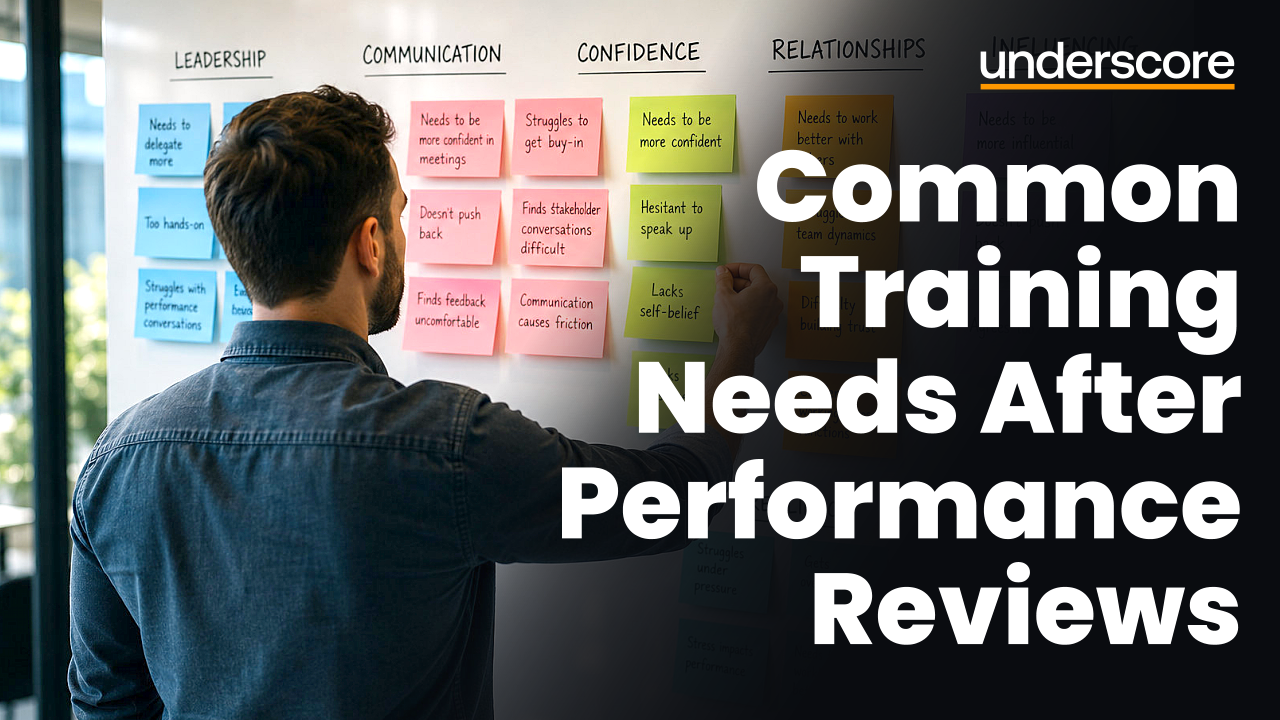
After performance reviews, most organisations don't struggle to identify training needs.
They struggle to choose between them.
One team needs leadership development.
Another needs communication skills.
Managers are asking for support with difficult conversations.
Employees want development opportunities.
Everyone has a valid case.
But most organisations don't have:
-
Unlimited budget
-
Unlimited time
-
Unlimited capacity
Which means somebody has to decide what happens first.
And that's often where things stall.
Not because the needs aren't real.
Because there are simply too many competing priorities.
The organisations that get the most value from training aren't necessarily the ones investing the most.
They're the ones making better prioritisation decisions.
And perhaps most importantly, they're able to explain and justify those decisions.
Every manager believes their team's needs are important.
Every employee wants development opportunities.
And they're usually right.
The challenge isn't deciding whether development matters.
It's deciding where limited budget, time and resources will have the greatest impact.
That's what effective prioritisation is really about.
This guide will help you do exactly that.
A Common Mistake
After performance reviews, many organisations create a long list of development actions and then try to tackle all of them.
The result?
-
Training becomes fragmented
-
Budgets get stretched
-
Development feels reactive
-
Impact becomes difficult to measure
Prioritisation isn't about ignoring development needs.
It's about deciding what will create the biggest impact first.
Step 1: Start With Themes, Not Individuals
If you've reviewed performance feedback, you'll already have a mix of:
-
Individual development requests
-
Manager observations
-
General capability concerns
The first step is to look for patterns.
👉 Don't prioritise people. Prioritise themes.
Example
Instead of:
-
8 people need confidence training
-
5 people need influencing skills
-
6 people struggle with feedback conversations
Group them into:
-
Confidence and personal impact
-
Influencing and communication
-
Difficult conversations
Why this matters
Training at a theme level:
-
Scales better
-
Has wider impact
-
Creates consistency
-
Is easier to justify commercially
If you're still working through performance review feedback and haven't yet identified the underlying capability gaps, start with our guide on How to Turn Performance Review Feedback into Effective Development.
Once you've grouped feedback into themes, our guide to The Most Common Training Needs Identified in Performance Reviews can help you identify the recurring capability gaps that organisations most commonly see.
Step 2: Prioritise Business Risk Before Development Requests
Not all training needs have the same impact.
Some are valuable.
Others are critical.
Ask yourself:
👉 If we don't address this, what happens?
High-impact signals
The issue:
-
Affects team performance
-
Creates delays or inefficiency
-
Impacts customers or stakeholders
-
Causes conflict, errors or rework
-
Prevents managers from managing effectively
Lower-impact signals
The issue is:
-
Primarily a personal preference
-
A general development interest
-
Helpful, but not urgent
Example
Managers avoiding performance conversations?
👉 High impact.
Someone wanting to improve presentation style?
👉 Potentially useful, but often lower priority.
This isn't about deciding what's important to individuals.
It's about identifying what matters most to organisational performance.
Step 3: Look for Scale, Not Noise
Some development needs are loud.
Others are widespread.
The widespread issues are usually where the biggest opportunities sit.
Example
You might see:
-
One strong request for negotiation training
-
Multiple mentions of poor communication
-
Repeated feedback around stakeholder management
👉 Communication and stakeholder management are likely to have greater organisational impact.
Why this matters
Training that addresses a recurring issue:
-
Delivers better ROI
-
Improves consistency
-
Creates wider behavioural change
-
Is easier to measure
When several teams are struggling with the same capability gap, that's usually a strong signal for action.
Step 4: Use a Simple Prioritisation Test
When several development needs appear equally important, a simple framework can help.
Ask three questions:
1. How many people does this affect?
-
One individual
-
A team
-
Multiple departments
-
Organisation-wide
2. What happens if we do nothing?
-
Little impact
-
Reduced performance
-
Increased risk
-
Direct business impact
3. Does it support a business priority?
-
Nice to have
-
Helpful
-
Important
-
Critical
The training needs that score highly across all three questions should usually move to the top of the list.
This approach won't remove every difficult decision, but it provides a more objective way to assess competing priorities.
Step 5: Consider Audience and Level
Not all training needs require the same solution.
Ask:
-
Who is this for?
-
What level are they operating at?
-
What experience do they already have?
Example
Leadership training could mean very different things.
For a new manager:
-
Delegation
-
Giving feedback
-
Managing performance
For a senior leader:
-
Strategic leadership
-
Organisational influence
-
Leading change
Why this matters
Getting the level wrong often leads to:
-
Disengaged learners
-
Poor outcomes
-
Wasted budget
The right topic delivered to the wrong audience rarely achieves the desired result.
Step 6: Balance Quick Wins With Longer-Term Development
A strong development plan usually includes both.
Quick wins
Typically:
-
Easier to deliver
-
Faster to implement
-
More visible in the short term
Examples:
-
Communication skills
-
Influencing skills
-
Presentation skills
-
Difficult conversations
Longer-term capability building
Typically:
-
More strategic
-
More transformational
-
Takes longer to embed
Examples:
-
Leadership development
-
Commercial awareness
-
Culture change
-
Organisational capability programmes
👉 The best development plans balance both.
Quick wins create momentum.
Longer-term development creates lasting impact.
Step 7: Align Training to Business Priorities
This is where training becomes more than just development.
👉 It becomes a business decision.
Ask:
-
What are we trying to improve as an organisation?
-
Where are the biggest pressure points?
-
What outcomes matter most this year?
Example
If the organisation is:
Growing rapidly
→ Leadership capability becomes critical.
Struggling with delivery
→ Communication, project and stakeholder skills become important.
Experiencing high pressure
→ Resilience and wellbeing may become a priority.
Why this matters
When development supports business priorities, it's easier to:
-
Gain buy-in
-
Secure budget
-
Demonstrate value
-
Measure outcomes
Example in Practice
Imagine your performance review process identifies:
-
12 requests for presentation skills training
-
8 requests for resilience training
-
15 new managers struggling with performance conversations
- 20 employees manually producing reports every month
At first glance, all three look important.
Many organisations instinctively prioritise the most requested topic.
But the management capability gap may actually have the biggest organisational impact.
Why?
Because effective managers influence:
-
Team performance
-
Employee engagement
-
Retention
-
Productivity
-
Workplace culture
This is where prioritisation becomes more than counting requests.
It's about assessing impact.
Putting It All Together
A simple prioritisation process looks like this:
If you're looking for a complete framework, practical tools and related guidance, visit our Performance Review Training Needs Hub.
1. Identify themes
Group feedback into common capability gaps.
2. Assess business impact
Focus on what affects performance most.
3. Look for scale
Prioritise recurring issues.
4. Apply the prioritisation test
Consider reach, risk and business relevance.
5. Define the audience
Match training to the right level and role.
6. Balance delivery
Combine quick wins with longer-term development.
7. Align to business priorities
Ensure training supports wider organisational goals.
A Practical Starting Point
If you're reviewing performance feedback across a team or organisation, our Performance Review Development Planner can help you organise feedback, identify common themes and prioritise development actions.
It helps you:
- Capture and organise performance review feedback
- Group feedback into common capability themes
- Prioritise development needs
- Build focused development plans
It's designed as a practical framework rather than a full training needs analysis, but it can help you move from feedback to action more quickly.
Once you've identified your priority capability gaps, our Training Needs Analysis Tool can help you explore suitable training routes and development options.
Explore the Full Performance Review Development Hub
Looking at performance review feedback from multiple teams or across the wider organisation? Visit our Performance Review Training Needs Hub for practical guidance, tools and training routes.
Need Help Prioritising Your Training Needs?
Identifying training needs is one thing.
Deciding where to focus first is often the harder challenge.
If you're reviewing performance feedback and trying to build a practical development plan, we're happy to help.
👉 Tell us what you’re trying to improve and we’ll help you identify the right development solution
👉 Explore our leadership and personal development courses
About the Author

Emma-Jane Haigh
Leadership and People Development Specialist, Executive Coach, and Facilitator. Emma-Jane designs and delivers training that helps managers and teams strengthen communication, build resilience, and lead with confidence. At Underscore, she runs leadership, management, and project management programmes focused on practical skills and real workplace impact.
Need help applying this in your organisation?
We work with HR, L&D teams and business leaders to turn these ideas into practical, instructor-led training that improves day-to-day performance.