The Most Common Training Needs Identified in Performance Reviews
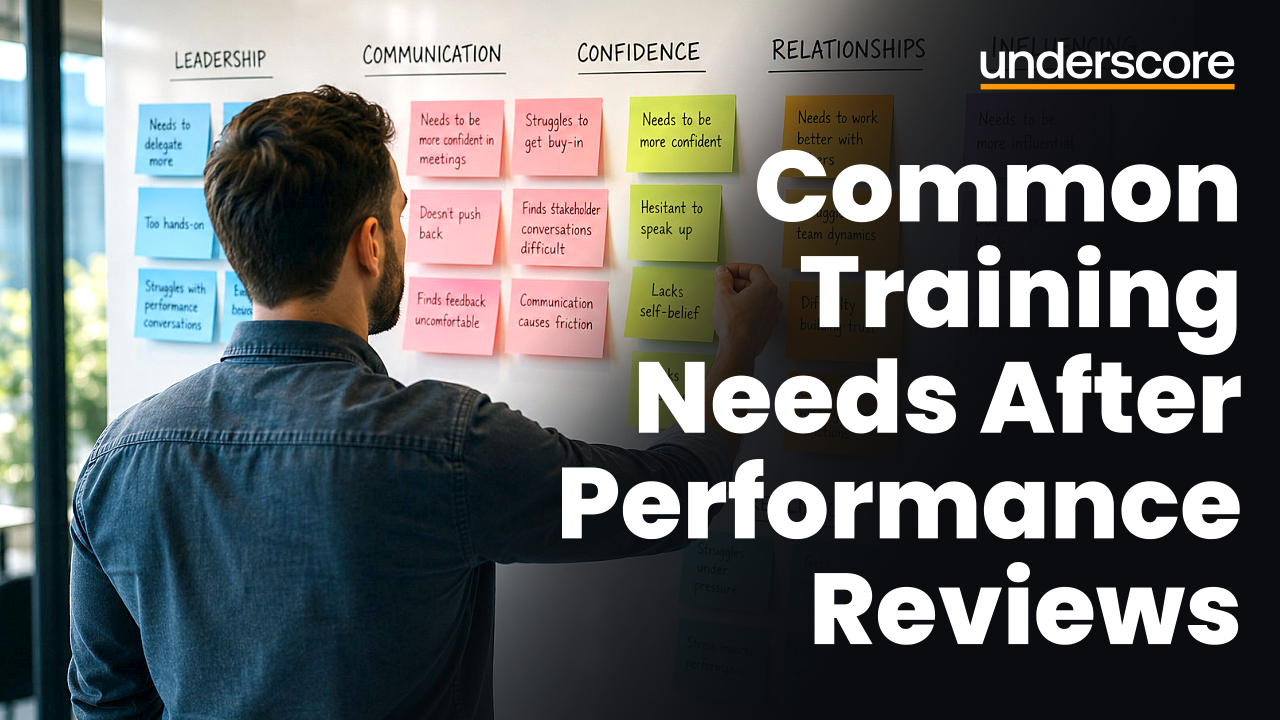
After performance reviews, many organisations feel overwhelmed by the volume of feedback.
Hundreds of comments.
Dozens of development requests.
Multiple managers highlighting different concerns.
At first glance, it can feel like everyone needs something different.
But that's rarely the case.
When you step back and look across teams, departments and roles, the same themes tend to appear again and again.
And that's good news.
Because performance reviews usually don't reveal hundreds of unique training needs.
They reveal a much smaller number of recurring capability gaps.
Once you recognise those patterns, it becomes much easier to:
-
Prioritise development needs
-
Identify appropriate training
-
Build more focused development plans
In this guide, we'll look at some of the most common training needs identified through performance reviews, what they typically mean in practice, and the type of development that often helps address them.
Why Patterns Matter
One of the biggest mistakes organisations make after performance reviews is treating every piece of feedback as a separate issue.
In reality, many comments point towards the same underlying capability gap.
For example:
-
"Needs to delegate more"
-
"Avoids difficult conversations"
-
"Too hands-on"
These may look like different problems.
But they often point to the same theme:
👉 Management capability
The sooner you start grouping feedback into themes, the easier it becomes to make sense of what your organisation actually needs.
Before looking at common themes, it's worth understanding how to turn performance review comments into structured development needs. Our guide on How to Turn Performance Review Feedback into Effective Development walks through that process step-by-step.
1. New Managers Lacking Confidence
What it sounds like
-
"Needs to delegate more"
-
"Struggles with performance conversations"
-
"Too hands-on"
-
"Avoids giving feedback"
Common capability gap
👉 Leadership and people management capability
New or developing managers often:
-
Default to doing the work themselves
-
Avoid difficult conversations
-
Lack structure for managing people
What this looks like in practice
You may have:
-
Newly promoted managers without formal management training
-
Managers spending most of their time doing rather than leading
-
Inconsistent management styles across teams
-
Team members receiving very different management experiences
Typical training route
👉 Leadership & Management training
Common focus areas include:
-
Delegation
-
Performance management
-
Giving feedback
-
Managing people
-
Leading teams effectively
2. Struggling to Influence Others
What it sounds like
-
"Needs to be more confident in meetings"
-
"Struggles to get buy-in"
-
"Doesn't push back"
-
"Finds stakeholder conversations difficult"
Common capability gap
👉 Influencing and communication skills
This often appears in:
-
Project roles
-
Matrix organisations
-
Business partnering roles
-
Positions with responsibility but limited authority
What this looks like in practice
People:
-
Present ideas but struggle to gain support
-
Agree too quickly instead of challenging constructively
-
Avoid difficult stakeholder conversations
-
Feel frustrated when decisions don't move forward
Typical training route
👉 Influencing & Communication training
Common focus areas include:
-
Influencing without authority
-
Assertiveness
-
Stakeholder management
-
Structuring messages
-
Handling resistance
3. Difficult Conversations Being Avoided
What it sounds like
-
"Avoids conflict"
-
"Doesn't address issues early enough"
-
"Finds feedback uncomfortable"
-
"Lets problems continue for too long"
Common capability gap
👉 Confidence and communication skills in challenging situations
What this looks like in practice
You may see:
-
Performance issues left unmanaged
-
Small concerns becoming larger problems
-
Tension building between colleagues or teams
-
Managers putting off difficult conversations
Typical training route
👉 Difficult Conversations or Conflict Management training
Common focus areas include:
-
Structuring difficult conversations
-
Giving constructive feedback
-
Managing emotional responses
-
Handling disagreement professionally
-
Turning conflict into productive outcomes
4. Low Confidence and Self-Belief
What it sounds like
-
"Needs to be more confident"
-
"Hesitant to speak up"
-
"Lacks presence"
-
"Needs to back themselves more"
Common capability gap
👉 Personal impact and confidence
Often linked to:
-
Self-belief
-
Visibility within the organisation
-
Imposter syndrome
-
Pressure or increased responsibility
What this looks like in practice
People:
-
Hold back in meetings
-
Avoid sharing ideas
-
Undersell their capability
-
Struggle to make their voice heard
Typical training route
👉 Personal Impact & Resilience training
Common focus areas include:
-
Confidence building
-
Personal presence
-
Communication style
-
Assertiveness
-
Managing self-doubt
5. Poor Working Relationships
What it sounds like
-
"Needs to work better with others"
-
"Struggles with team dynamics"
-
"Communication causes friction"
-
"Could collaborate more effectively"
Common capability gap
👉 Emotional intelligence and relationship-building skills
What this looks like in practice
You may notice:
-
Miscommunication between teams
-
Friction in day-to-day interactions
-
Difficulty building trust
-
Challenges working across functions
Typical training route
👉 Working Relationships or Emotional Intelligence training
Common focus areas include:
-
Self-awareness
-
Understanding others
-
Communication styles
-
Building trust
-
Collaborative working
6. Lack of Commercial or Business Awareness
What it sounds like
-
"Needs to think more commercially"
-
"Doesn't fully understand the bigger picture"
-
"Decisions lack business context"
-
"Needs to be more strategic"
Common capability gap
👉 Commercial awareness and strategic thinking
What this looks like in practice
People may:
-
Make decisions in isolation
-
Focus only on their own area
-
Struggle to link activity to business outcomes
-
Miss the wider impact of decisions
Typical training route
👉 Decision Making & Business Awareness training
Common focus areas include:
-
Commercial awareness
-
Strategic thinking
-
Financial fundamentals
-
Business decision making
-
Understanding organisational priorities
7. Teams Under Pressure
What it sounds like
-
"Struggles under pressure"
-
"Gets overwhelmed"
-
"Stress impacts performance"
-
"Needs to manage workload better"
Common capability gap
👉 Resilience and coping strategies
What this looks like in practice
You may see:
-
Reduced performance during busy periods
-
Burnout risk
-
Poor decision-making under pressure
-
Difficulty maintaining focus and energy
Typical training route
👉 Resilience & Wellbeing training
Common focus areas include:
-
Managing pressure
-
Emotional control
-
Energy management
-
Personal resilience
-
Maintaining performance during challenging periods
8. Low Confidence Using Systems and Technology
What it sounds like
"Relies on others for spreadsheets"
"Processes take too long"
"Not using available tools effectively"
"Reporting is highly manual"
Common capability gap
👉 Systems and workplace productivity skills
Typical training route
- Excel
- Power BI
- Microsoft 365
- Copilot
9. Projects Lack Structure or Consistency
What it sounds like
"Projects often run late"
"Stakeholders aren't engaged"
"Risks are identified too late"
"Project planning is inconsistent"
Common capability gap
👉 Project delivery and project management skills
Typical training route
- Principles of Project Management
- Managing Smaller Projects
- Stakeholder Engagement
- Project Risk Management
How to Use This Guide
These themes are rarely isolated.
In most organisations, you'll see several appearing at the same time.
A simple way to apply this is:
-
Review performance feedback across teams.
-
Look for recurring patterns.
-
Group similar comments together.
-
Identify the capability gap underneath them.
-
Match those gaps to potential training routes.
Example
You review feedback across a department and identify:
-
Several new managers lacking confidence
-
Multiple comments about difficult conversations
-
Ongoing stakeholder management challenges
Rather than treating these as dozens of separate issues, you can recognise three clear development themes and build a more focused approach to training.
A Quick Starting Point
If you want to move quickly from performance review feedback to potential training options, you can use our Training Needs Analysis Tool.
It helps you:
-
Categorise the challenge
-
Identify likely training routes
-
Get a practical starting recommendation
It's designed as a quick guide rather than a full diagnostic, but it can help you sense-check your thinking and move faster.
If you're working through larger volumes of performance review feedback, our Performance Review Development Planner can help you organise feedback, identify themes and prioritise development actions.
Once you've identified your capability gaps, the next challenge is deciding which ones to tackle first. Our guide on How to Prioritise Training Needs Across a Team or Organisation provides a practical prioritisation framework.
Explore the Full Performance Review Development Hub
Looking at performance review feedback from multiple teams or across the wider organisation? Visit our Performance Review Training Needs Hub for practical guidance, tools and training routes.
Final Thoughts
Performance reviews don't usually reveal hundreds of different training needs.
They reveal a smaller number of recurring capability gaps.
The key is not to focus on every individual comment.
It's to recognise the patterns underneath them.
Once those patterns become visible, identifying the right development and training options becomes much easier.
And that's often the difference between reacting to feedback and building a focused development strategy.
If you've identified common themes and want help turning them into the right training approach:
👉 Tell us what you’re trying to improve and we’ll help you identify the right development solution
👉 Or explore our leadership and personal development courses
About the Author

Emma-Jane Haigh
Leadership and People Development Specialist, Executive Coach, and Facilitator. Emma-Jane designs and delivers training that helps managers and teams strengthen communication, build resilience, and lead with confidence. At Underscore, she runs leadership, management, and project management programmes focused on practical skills and real workplace impact.
Need help applying this in your organisation?
We work with HR, L&D teams and business leaders to turn these ideas into practical, instructor-led training that improves day-to-day performance.