What Great People Managers Do Differently When the Pressure’s On
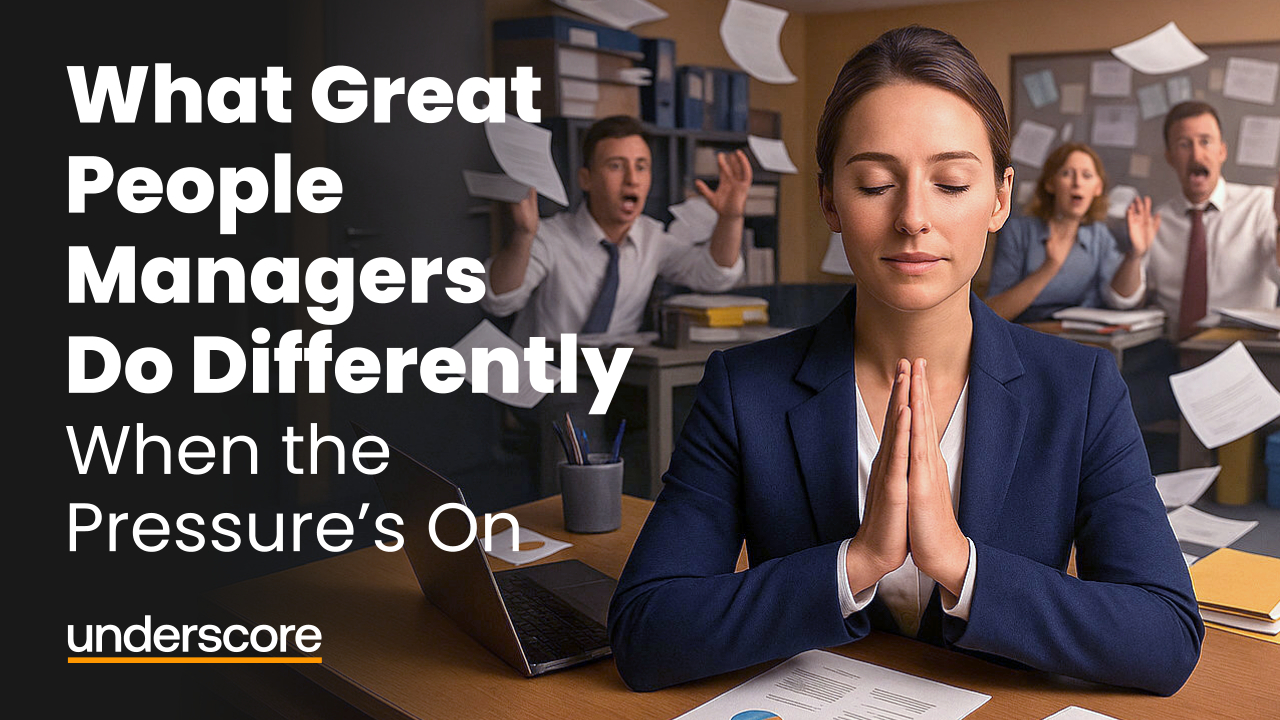
It’s 9:02 on a Tuesday morning.
You’ve barely opened your laptop and your inbox is already a battlefield - performance reviews, a late project update, a last-minute meeting request from your boss, and a “quick chat?” message from someone in your team who never wants a quick chat.
And somehow, everyone’s waiting for you to stay calm.
That’s the moment every people manager knows.
The one where you take a breath, smile, and think: “Right… let’s go.”
The Reality of Leadership Under Pressure
People think management is about control - but most days, it’s about chaos management.
One moment you’re a strategist, the next a counsellor, then a negotiator, then the person who magically finds the budget that doesn’t exist.
You’re not just managing tasks - you’re managing emotions, energy, expectations… and your own heartbeat.
So what makes the great managers different?
Not their title. Not their workload.
It’s what they do in those moments when the pressure peaks.
They don’t crumble.
They don’t lash out.
And they don’t pretend it’s easy.
They’ve just learned a few key habits that keep them calm, clear, and capable - no matter what’s flying at them.
Here’s what they do differently.
1. They Know How to Pause Without Freezing
You can spot a great manager in a crisis.
They’re the ones who don’t rush to fill the silence.
Something goes wrong - a client’s upset, a project slips - and while everyone else panics, they do something unexpected:
They stop. They breathe.
Not because they don’t care.
Because they know the first reaction is rarely the best one.
That 10-second pause is everything. It’s the space between reacting and responding - between emotion and choice.
And that’s what personal resilience really is.
It’s not toughness. It’s control.
🗝️ The best managers don’t wait to feel calm - they practise it.
Through training, reflection, and self-awareness, they learn to recognise their triggers and manage their reactions before they manage anyone else’s.
📘 Learn more: Personal Resilience
Discover how to manage stress, build confidence, and stay effective under pressure.
2. They Read the Room Before They Try to Lead It
Have you ever walked into a meeting and instantly felt the tension - like static in the air?
The body language, the sighs, the forced smiles.
Most people ignore it.
Great managers don’t.
They read it.
And more importantly, they use it.
Because they understand that emotions are data - they tell you what’s really happening beneath the surface.
That’s where emotional intelligence comes in.
It’s what separates the “people who manage” from the “managers people trust.”
They notice when someone’s quiet because they disagree but won’t say so.
They sense when frustration is about something deeper.
And they adjust their tone, pace, or approach to keep everyone engaged instead of defensive.
💬 One manager I coached put it perfectly:
“When I lower my voice, the room follows.”
That’s emotional control in motion.
📘 Learn more: Emotional Intelligence
Build empathy, self-awareness, and influence that keeps teams calm and connected.
3. They Don’t Avoid Hard Conversations - They Redefine Them
There’s a special kind of pressure that comes from difficult conversations.
You know the ones:
Performance issues.
Unmet expectations.
Feedback that needs to be said - but you’d rather not.
Most managers put them off.
Great managers lean in - not because they enjoy them, but because they’ve learned how to make them productive.
They prepare.
They use structure.
They focus on behaviour, not personality.
And they see feedback for what it really is: an act of respect.
Because ignoring problems doesn’t make them go away - it just moves them into the shadows, where they grow quietly.
🗝️ Staying calm in tough conversations isn’t about being unfeeling - it’s about being fair.
📘 Learn more: Handling Challenging Conversations
Develop confidence and structure for conversations that build trust, not tension.
4. They Build Calm, Not Just Confidence
When the pressure’s on, people don’t just follow plans - they follow presence.
A team’s emotional tone mirrors its leader.
If you panic, they panic.
If you breathe, they breathe.
That’s why great managers focus on creating calm, not control.
They build psychological safety - a sense that it’s okay to speak up, make mistakes, or say, “I’m not sure.”
They do it through everyday habits:
- Asking more questions than they answer.
- Giving credit out loud.
- Listening longer than feels natural.
It’s not glamorous work. But it’s what turns a group of people into a resilient team.
📘 Learn more: Building and Leading Effective Teams
Learn how to build trust, communication, and collaboration under pressure.
The Real Lesson: Calm Is a Skill
Every manager has pressure.
But not every manager learns to use it.
The great ones do.
They know that calm isn’t a luxury - it’s a leadership skill.
And it’s not something you’re born with; it’s something you build.
Because when you stay calm, your team stays capable.
And when your team stays capable, everything else starts to work again.
📘 Explore courses that help you lead with clarity and calm under pressure:
- Personal Resilience – manage emotions and stay composed when things get tough.
- Emotional Intelligence – read situations, respond with balance, and lead with empathy.
- Handling Challenging Conversations – turn tension into productive dialogue.
- Building and Leading Effective Teams – create trust, clarity, and performance that lasts.
All of our Leadership & Personal Development courses can be delivered virtually or onsite and include six months of post-course support to help embed learning.
📘 Explore our full range of Leadership & Personal Development courses
📅 View our Public Training Programme dates
📧 [email protected]
📞 +44 (0)20 8152 6551
New to management?
Learning how to stay calm under pressure is one of the biggest challenges for first-time managers. Explore practical training and resources designed to build confidence early in your leadership journey. 👉 Visit the New Manager Training hub
About the Author

Emma-Jane Haigh
Leadership and People Development Specialist, Executive Coach, and Facilitator. Emma-Jane designs and delivers training that helps managers and teams strengthen communication, build resilience, and lead with confidence. At Underscore, she runs leadership, management, and project management programmes focused on practical skills and real workplace impact.
Need help applying this in your organisation?
We work with HR, L&D teams and business leaders to turn these ideas into practical, instructor-led training that improves day-to-day performance.